Breast Cancer, Psilocybin & Facing Fear | Heather Lee
Oct 20, 2026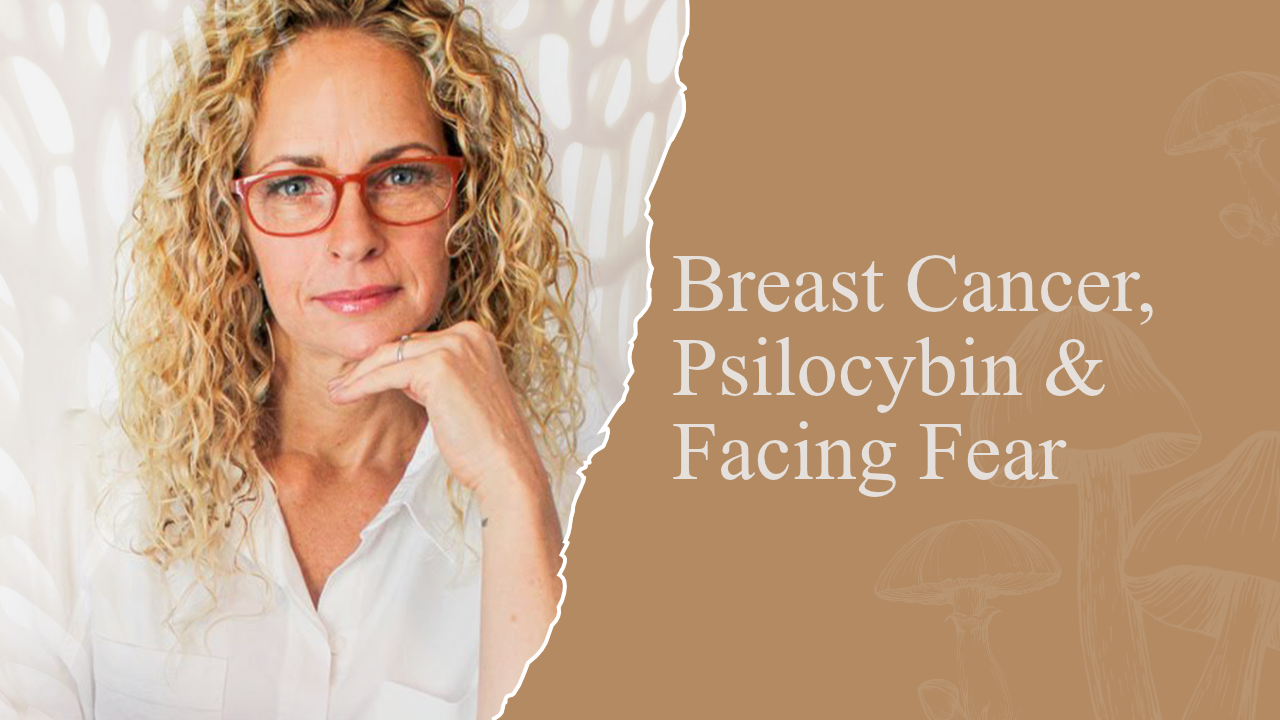
Two Days After Her Training, Heather Lee Was Diagnosed With Breast Cancer
On Monday, Heather Lee completed her psychedelic therapy training.
On Wednesday, she received a phone call telling her she had breast cancer.
She had been preparing to travel with her husband. Before they left, she was taking care of the ordinary appointments that are easy to postpone: the dentist, a breast exam, the practical work of looking after a life.
Then the diagnosis arrived.
Her mother had died of breast cancer. Suddenly the work Heather had trained to support in others met a question she could not keep at a professional distance.
How would she face this herself?
In this episode of Sacred Mycelium, Heather joins Victoria Lee Starr to explore that question through her own experience of illness, medical care, spiritual meaning-making, and psychedelic work.
The story is compelling because of its human stakes. A diagnosis does not arrive in an empty room. It arrives inside a life already carrying memories, relationships, fears, and ideas about what might happen next.
When a Diagnosis Comes With a Family Story
Later in the conversation, Heather describes the parallels she noticed between her life and her mother’s.
Her mother had died of breast cancer around the age at which Heather received her diagnosis. Both had also gone through divorce while raising two young daughters.
For Heather, those similarities felt impossible to ignore.
They did not predict what would happen to her. But they shaped the emotional world in which she received the news.
A family history can make fear feel very close. Someone else’s experience becomes the image that comes to mind before you have had time to understand your own circumstances.
Heather describes wanting to navigate her experience differently. That wish belongs to her personal story; it is not a suggestion that her mother could have chosen a different medical outcome.
What the conversation reveals is the need to distinguish a remembered story from the uncertain life unfolding now.
The Medical Decisions Were Real
Heather is clear that she used medical care.
She describes choosing a full double mastectomy after the diagnosis, alongside the personal spiritual work she was exploring.
That detail must stay inside the story.
It would be easy to reduce a conversation like this to an attention-grabbing claim about mushrooms and cancer. Doing so would erase the medical treatment Heather received and misrepresent what her experience can tell us.
The question she brings to the episode is about navigating illness emotionally and spiritually.
How do you relate to fear?
How do you feel some agency?
What can help you remain present while making difficult decisions?
Those questions can sit alongside medical treatment. They do not replace it, and one person’s answers cannot establish what is appropriate for someone else.
Facing Mortality Was Not a Peaceful Shortcut
Heather describes her early psychedelic experience after the diagnosis as difficult.
She was confronting mortality. The significance she found in the experience did not mean the experience was easy, or that her medical situation had become simple.
This is part of what gives her account its weight.
The story does not begin with someone who felt calm and certain. It begins with someone whose training had just been interrupted by news that made the questions personal.
Heather says the experience helped her identify ways of thinking she wanted to address and develop her own sense of direction during recovery.
These are her interpretations and recollections. They do not establish that fear caused her cancer, that emotional work changed its course, or that psychedelics treat the disease.
The meaning she made of the experience belongs to her. A reader can hear that meaning without turning it into a medical explanation.
The Fear That Can Remain Around Cancer
The conversation also turns toward life after treatment and the fear of recurrence.
Victoria brings up an online account from someone who had finished chemotherapy but remained frightened by what they had been through. Heather responds by discussing the emotional support she would like to see around that stage of a person’s life.
Medical milestones and emotional milestones do not always arrive together.
A person may have completed a course of treatment while still feeling unsettled by what happened. Ordinary sensations, appointments, or reminders can take on a different significance after illness.
Heather speaks about rumination and the wish for a little more room around fear. Her account offers a practitioner’s perspective and personal experience, rather than a promise that a particular intervention will remove anxiety.
What stands out is the recognition that a person’s emotional life still deserves attention after the visible crisis has changed.
Finding Meaning Without Being Told What It Means
Heather describes a person she supported who experienced an image of heavy, rusted armor.
In her account, taking the armor off was connected with feeling lighter and encountering a sense of possibility beyond the immediate fear.
The image is personal. It is not proof of an afterlife, a prediction, or an interpretation that should be applied to someone else.
That is consistent with another important theme in the episode: a facilitator should not impose their own meaning.
Heather describes asking what an experience meant to the person who had it. What did it feel like? Did it connect with anything familiar? What did they understand from it?
A powerful story can make us want an explanation quickly.
Her approach leaves room for the person’s own language, including uncertainty.
Integration Continues After the Experience
Victoria and Heather repeatedly return to the work that happens afterward.
An experience may offer an image, a phrase, a feeling, or a new perspective. Bringing it into life is another process.
Heather talks about reflective practices such as journaling, art, and personally meaningful reminders. The point is not a prescribed formula. It is the ongoing relationship between an experience and the life a person returns to.
What still feels true?
What is difficult to put into practice?
What support is needed now?
What has changed, and what has not?
Heather also shares that she continues doing her own reflective and psychedelic work. Her personal pattern is not a recommendation for anyone else’s treatment schedule.
The episode’s more useful invitation is to resist treating a single meaningful moment as a requirement to be permanently finished with fear.
Curiosity Needs More Than Reassurance
A story about someone else’s experience can spark curiosity. It cannot determine whether psychedelic work is appropriate for the listener.
When Victoria asks what to look for in a retreat or facilitator, Heather emphasizes preparation, questions, and the relationship with the person offering support.
What is their training?
What experience do they have with the concerns you are bringing?
How many participants and support people will be present?
What privacy and boundaries are available?
What preparation and integration are included?
Victoria also raises medication review and whether someone is a suitable fit.
Those questions matter, but even thoughtful answers cannot guarantee safety or a particular outcome. Psychedelics carry risks, may interact with medications, and are not appropriate for everyone. Individual medical and mental health screening, qualified support, and local law must be considered.
A podcast should not be used to change prescribed medication or make cancer treatment decisions.
There should be room to ask questions without pressure to proceed.
From Fear to the Rest of a Life
Heather’s cancer story opens the conversation. It does not contain the whole of it.
She and Victoria also talk about women in their 60s, 70s, and beyond who feel curious about what they still want to become.
Grief and possibility can exist together.
A person can carry loss and still want to create. She can question an old identity without knowing exactly what comes next. She can feel afraid and still be interested in life.
Heather describes resilience through the possibility of adapting and updating familiar narratives. For some women, that may include reconsidering the sentence “this is just who I am.”
Her cancer experience makes that theme more concrete. The desire to feel present is not an abstract ideal when someone has had reason to think closely about time.
Your Own Voice Still Matters
The cancer story also opens a conversation about finding your own voice inside illness and uncertainty.
Heather describes taking part in decisions about her medical care and choosing how she wanted to make meaning of her experience.
Later, she tells the story of a grandmother who began recognizing a habit of staying quiet about her needs. Through integration, the grandmother saw how often she had expected others to know what she had never said.
These stories are different, but they meet in a human question: where is your own voice inside what you are living through?
It may be in asking a clinician another question.
Telling someone you are frightened.
Acknowledging that you need company.
Naming the support you want.
Allowing yourself to imagine something beyond the role you have always played.
Speaking does not give us control over every outcome. It can give other people a clearer understanding of what matters to us.
What Heather’s Story Leaves Us With
The most striking detail remains the chronology.
Training completed on Monday.
A cancer diagnosis on Wednesday.
In two days, the question changed from how to support other people to how to meet an uncertain chapter of her own life.
Heather’s account does not offer a universal path through illness. It offers a personal story about medical care, mortality, meaning, and continuing to live within uncertainty.
Perhaps the question to carry away is not how to make fear disappear.
It is what kind of care, connection, and support might help you feel less alone while you move through what is real.
Watch or Listen
Breast Cancer, Psilocybin & Facing the Fear of Dying | Heather Lee
Available Tuesday, October 20, 2026 at 2:00 AM EST.
Watch on YouTube: https://youtu.be/j8N77NXgU3Y
Listen on Apple Podcasts: https://podcasts.apple.com/us/podcast/the-sacred-mycelium-podcast/id1895858647
Listen on Spotify: https://open.spotify.com/show/0Aau5FCBCRqePX1whHLDpg
Meet Heather Lee
Heather’s work brings together women’s mental health, mind–body practice, and psychedelic-assisted exploration. Her book, The Psilocybin Sessions, shares women’s stories of inner wisdom and awakening through major transitions.
Website: https://heatheralee.com/
Book: https://heatheralee.com/book
Media: https://heatheralee.com/media
Instagram: @heatherleewellness
Continue With Victoria
FREE REPLAY: Trauma, the Body, and the Breath
https://www.victorialeestarr.com/freebies
More writing: https://www.victorialeestarr.com/blog
GET THE FREE WORKSHOP
Trauma, the Body, and the Breath
A free on-demand workshop on releasing what the mind can’t, and how psilocybin supports healing through neuroscience, breathwork, and plant medicine
DON'T MISS WHAT'S NEXT
You don’t have to go looking for the next conversation. New episodes and reflections are shared as they unfold.
Stay connected as they’re released.
We hate SPAM. We will never sell your information, for any reason.