
Did Mushrooms Reveal Jung’s Shadow? The Experience Was Only the Beginning
Oct 05, 2026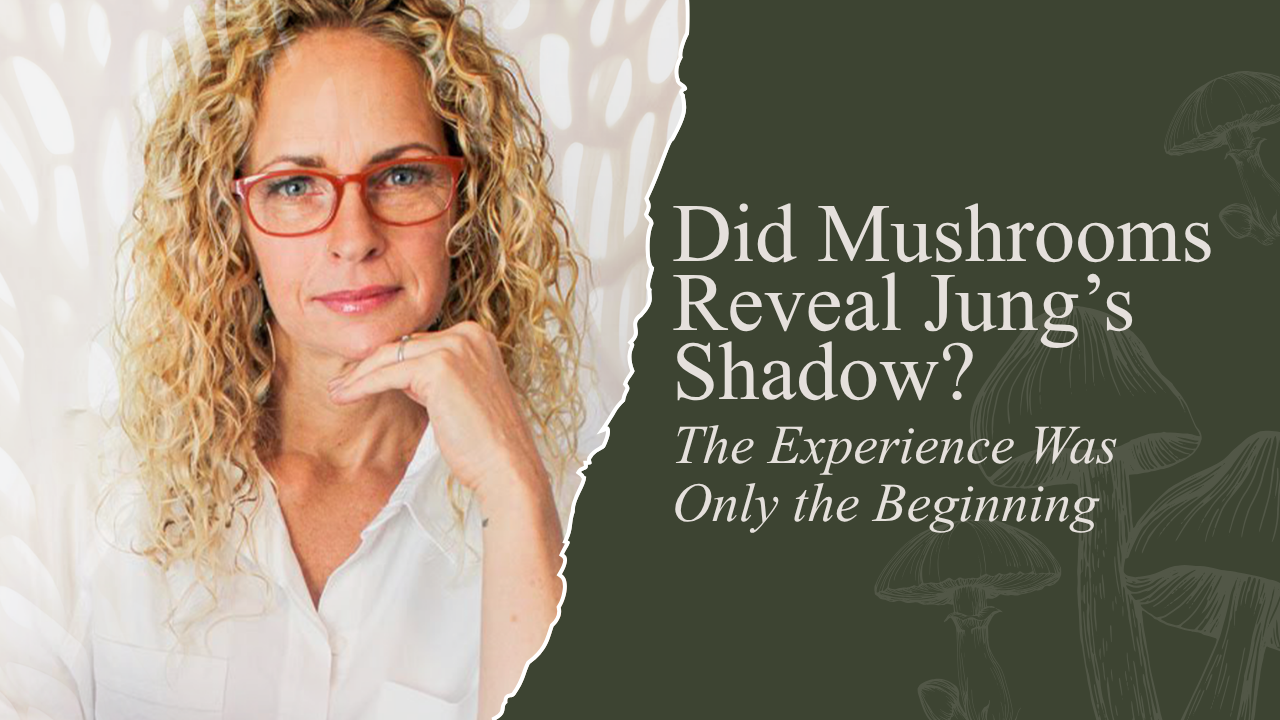
What if you encountered different parts of yourself during a mushroom experience, then found their names in a psychology book months later?
That is the tension at the heart of Episode 11 of Sacred Mycelium. A person described an intense experience full of symbolic imagery, internal voices, a sense of oneness, and a confrontation with less acknowledged parts of themselves. Later, in therapy, they encountered Carl Jung’s writing about the shadow, archetypes, and individuation.
They had the experience first. Then they found the vocabulary.
The Story That Led to Jung
The person in this story had explored mushrooms before taking what they called a heroic dose. They reported a profound sense of connection and an encounter they understood as God. They also described something like a rhythm beneath existence—an impression that ordinary language could barely hold.
But the experience that ultimately led them toward Jung had more to do with their own psyche. As they questioned their reactions, fears, and defenses, different motivations seemed to become distinct. Some appeared as voices; others took symbolic form, including animals. During a particularly intense moment, they felt pulled behind those figures and their ordinary identity. They also felt confronted by a choice involving darker or less acknowledged parts of themselves.
They brought the experience into therapy. There, Jung’s ideas gave them a way to think about what they had encountered. Over time, they began recognizing those patterns while sober. Their aim became living with greater awareness rather than repeating the trip.
What Is an Archetype?
It is tempting to picture archetypes as fixed characters living inside the brain: the Mother, the Hero, the Trickster, the Shadow. Victoria offers a more useful lens. We can think of them as recurring human patterns—ways of relating and symbolic themes that appear across dreams, stories, myths, and lives.
In an altered state, an abstract process may become a vivid encounter. A defensive part of yourself may look like a wolf. Fear may appear as a figure standing before you. The image can carry emotional force even if we cannot prove it is an external being.
That difference matters. An experience can be psychologically meaningful without settling a metaphysical question.
The Shadow Is More Than What We Call “Bad”
The shadow includes what we struggle to include in our conscious picture of ourselves. It can hold anger, jealousy, fear, or desire. It may also hold confidence, creativity, power, and joy—anything we learned was unacceptable to be.
When something is pushed away, it does not necessarily disappear. It can show up in projection: the traits we find unbearable in someone else may touch something we cannot comfortably acknowledge in ourselves.
In the story, the person felt faced with material they could no longer dismiss. Victoria does not treat that as proof that Jung had identified a literal hidden architecture. She sees a useful invitation: What am I unwilling to claim? What might change if I could look honestly at it?
Why the Different Voices Matter
“Part of me wants to leave, but part of me is afraid.” We say things like this all the time. Human beings contain contradictory needs and motivations. A psychedelic experience may make those familiar divisions feel unusually vivid, as though fear or protection could speak for itself.
It is possible to ask what a figure represents, what it wants, and what it protects without rushing to diagnose the experience or declare it supernatural. Curiosity makes room for meaning. Certainty can close it down too early.
What About Meeting God?
The account also included a deeply felt encounter with God and a sense of unity. Victoria takes the person’s experience seriously while remaining humble about what it proves. A profound feeling of certainty during an altered state does not establish one objective explanation.
The more revealing question may be what follows. Does the experience make someone more honest, compassionate, grounded, and connected? How does it change what they do when ordinary life returns?
A Breakthrough Is Not the Same as Integration
You can experience oneness and still snap at someone weeks later. You can meet your shadow and still avoid it once the moment passes. A vision does not automatically reorganize your relationships or habits.
This person did something especially meaningful: they sought therapy, found language for the experience, and practiced noticing those parts in sober life. Eventually they no longer needed mushrooms to encounter them. The goal shifted from another extraordinary state to a more honest everyday relationship with themselves.
Can you recognize projection when it happens? Listen to a frightened part instead of trying to erase it? Hold conflicting feelings without letting them fight for control in the dark? That is where the work becomes real.
Did Mushrooms Reveal Jung?
Victoria’s answer is deliberately open. Jung studied symbols, dreams, myth, contradictions, and unconscious material. Psychedelic states can amplify those same dimensions of experience. It is understandable that Jung’s writing might feel recognizable to someone who first encountered vivid symbolic material in a trip.
Maybe the mushrooms did not teach this person Jung. Maybe they brought the person into contact with their own inner landscape, making Jung’s map recognizable afterward.
The Key Takeaway
The most important part of this story may be what happened after the heroic dose. The person became curious. They asked for support. They learned to recognize their internal patterns without depending on another psychedelic experience.
An opening can show you how much of yourself was already there. Bringing those pieces home is the longer work.
Listen to Episode 11 of Sacred Mycelium, launching Tuesday, October 6, 2026:
YouTube: https://youtu.be/QppxcbAAGXI
Part Two arrives Friday, November 6, 2026. Follow the show for the next conversation.
This article discusses a reported experience and interpretive frameworks. It is not medical or mental health advice, and it does not establish a diagnosis or the cause of a mystical experience.
GET THE FREE WORKSHOP
Trauma, the Body, and the Breath
A free on-demand workshop on releasing what the mind can’t, and how psilocybin supports healing through neuroscience, breathwork, and plant medicine
DON'T MISS WHAT'S NEXT
You don’t have to go looking for the next conversation. New episodes and reflections are shared as they unfold.
Stay connected as they’re released.
We hate SPAM. We will never sell your information, for any reason.